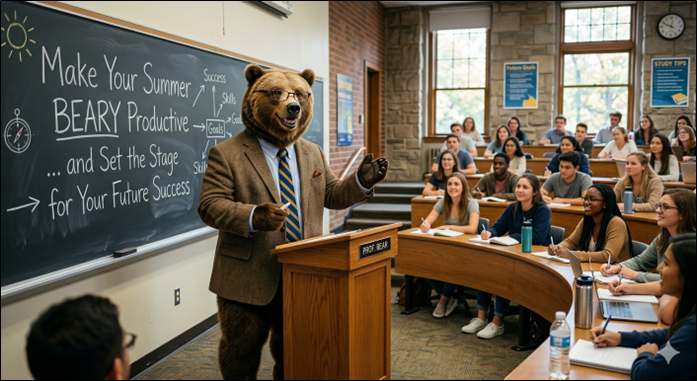
For most college students, summer feels like a long-overdue exhale: classes end, the days stretch out, and a season of sleep, sunshine, and side hustles begins. Many of you will work, travel, or simply rest – and you should rest. But ten or twelve weeks is also an enormous block of unstructured time, and how you spend even a small slice of it can compound for years. The students who arrive on campus in August recognizably better than they were in May are not the ones who tried to do everything. They are the ones who chose two or three deliberate practices, kept showing up, and let small daily investments accumulate.
The frame that follows is simple: invest a couple of hours a day in your future self, and protect the rest of the day for rest, friends, family, and adventure. Personal and professional development are not opposites of summer fun – done well, they make the rest of summer richer. And they will make you more employable, and … a better person.
What follows is a practical menu: skills to build, videos to watch, books to read, and habits to try. Pick three major activities – and three small ones. Tell someone. Begin the Monday after exams.
1. Master AI – Especially Agentic AI
If you are a business student in 2026 and you are not fluent with ChatGPT, Claude, and/or Gemini, then you are graduating with a missing limb. The companies you want to work for already assume baseline competence; the ones who will lead the next decade assume mastery, especially of agentic AI – models that plan, use tools, and carry out multi-step work on your behalf. Spend a few hours a week this summer becoming dangerous with these tools. Ask Claude to summarize earnings calls, draft cover letters, build study guides, debug code, and run spreadsheet analyses. Use ChatGPT’s Advanced Voice and Custom GPTs. Turn agents loose on real research projects. Then use what you build in everyday life: meal planning, travel logistics, study guides, workout programs, fantasy drafts.
Highly rated free courses to start with:
- Anthropic Academy – Claude API and agent tracks: anthropic.com/learn
- DeepLearning. AI × Anthropic – “Building Toward Computer Use with Anthropic”: deeplearning.ai/short-courses
- DeepLearning. AI × OpenAI – “ChatGPT Prompt Engineering for Developers” and “Building Systems with the ChatGPT API”: deeplearning.ai/short-courses
- OpenAI Academy – free lessons on ChatGPT, GPTs, and agents: academy.openai.com
- Coursera – “Generative AI for Everyone” by Andrew Ng (audit free): coursera.org/learn/generative-ai-for-everyone
- DeepLearning.AI – “AI Agents in LangGraph” and “Multi-AI-Agent Systems with crewAI”: deeplearning.ai/short-courses
Set a goal: by August 1, you can plan a week, prepare for a job interview, and analyze a CSV using only AI tools and your own judgment.
2. Earn an Online Excel Certificate
Excel is still the lingua franca of business. Recruiters notice the line on your résumé that reads “Microsoft Office Specialist: Excel Associate (MO-200)” or its Expert sibling. Whichever path you choose, commit to building three real artifacts – a personal budget, a stock-screening model, and a small dashboard with PivotTables – so you can demonstrate skill, not just claim it.
- Microsoft’s official MOS Excel certification (study resources): learn.microsoft.com/credentials/mos-excel-associate
- Coursera – “Excel Skills for Business” Specialization by Macquarie University (top-rated, audit free; pay for the certificate): coursera.org/specializations/excel
- Coursera – “Excel Skills for Data Analytics and Visualization” Specialization: coursera.org/specializations/excel-data-analytics-visualization
- LinkedIn Learning – “Excel Essential Training” by Dennis Taylor (free with many student subscriptions): linkedin.com/learning
- edX × Microsoft – “Analyzing and Visualizing Data with Excel”: edx.org
3. Learn Python
Python is the most-requested skill across finance, marketing analytics, operations, and consulting. Two months is enough to go from zero to comfortable. Pair the course with a small weekly project: scrape a website, automate a spreadsheet, build a stock backtest, or write a script that emails you a daily news brief.
- Coursera – “Python for Everybody” Specialization by Dr. Charles Severance, University of Michigan (the gold standard): coursera.org/specializations/python
- Harvard CS50P – “CS50’s Introduction to Programming with Python” (free, taught by David Malan): cs50.harvard.edu/python
- freeCodeCamp – “Scientific Computing with Python” certification (free, ~300 hours): freecodecamp.org/learn/scientific-computing-with-python
- Codecademy – “Learn Python 3” track: codecademy.com/learn/learn-python-3
- Coursera – “Google IT Automation with Python” Professional Certificate: coursera.org/professional-certificates/google-it-automation
4. Watch the Right Videos
These personal – and professional – development videos are all available free, and most are under twenty minutes. Make a “summer playlist” and watch one with your morning coffee:
- Steve Jobs, 2005 Stanford Commencement Address (read the text here)
- Eduardo Briceño, “The Power of Belief: Mindset and Success” (TEDx)
- Marcus Taylor, “Measuring Comfort Zones” (TEDx)
- Arianna Huffington, “How to Succeed? Get More Sleep” (TED)
- Dr. James Maas, “The Power of Sleep” (UP Experience 2010 talk)
- Daniel Goldstein, “The Battle Between Your Present and Future Self” (TED)
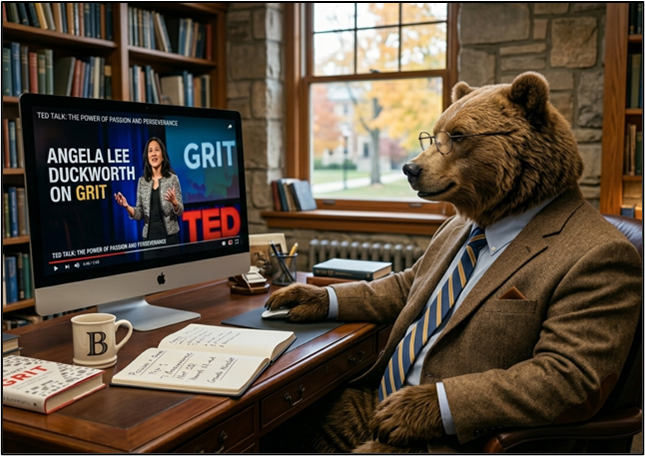
- Angela Lee Duckworth, “Grit: The Power of Passion and Perseverance” (TED)
- Susan Cain, “The Power of Introverts” (TED)
- Shawn Achor, “The Happy Secret to Better Work” (TED)
- Richard St. John, “8 Secrets of Success” (TED)
- Simon Sinek, “How Great Leaders Inspire Action” (TED)
- Brené Brown, “The Power of Vulnerability” (TED)
- Adam Grant, “Are You a Giver or a Taker?” (TED)
- Julian Treasure, “How to Speak So That People Want to Listen” (TED)
- Amy Edmondson, “How to Turn a Group of Strangers into a Team” (TED)
- Cal Newport, “Deep Work” lectures and interviews (YouTube)
- Ali Abdaal, productivity and learning videos (YouTube)
Watch actively: pause, write down one takeaway, and apply it that day. (Keep a journal!)

5. Conduct a Weekly “Reverse Interview”
Once a week, ask a working professional for twenty minutes. Frame it as a reverse interview – you are interviewing them, not job-hunting. Ask:
- How did you end up in this role?
- What does a typical week look like?
- What do you wish you had known at twenty?
- What surprised you about the industry?
- Who else should I talk to?
Twelve summer weeks equals twelve professionals, twelve perspectives, and – almost always – two or three warm referrals you would never have received otherwise. Keep a one-page summary of each conversation and send a hand-written thank-you note within twenty-four hours. Few habits compound faster than this.
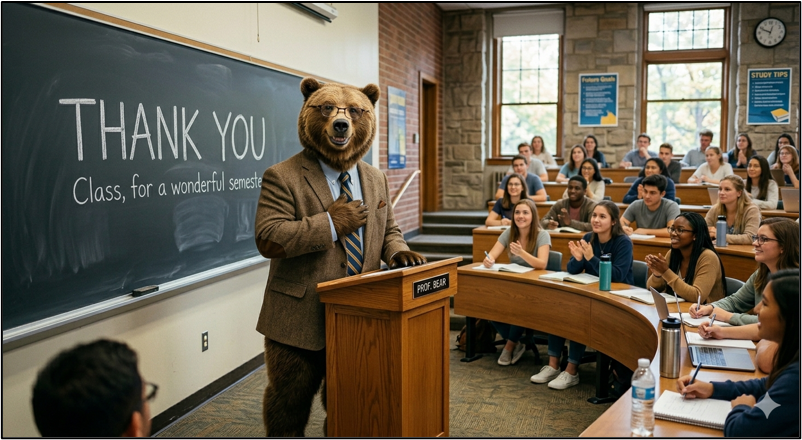
See “Dr. Bear’s Guide to the Informational Interview” (also called “Reverse Interview”) technique.
6. Meet One New Colleague a Week
If you are working a summer job or internship, set a standing rule: every week, invite one colleague you do not know to coffee or lunch. Ask about them – their path, their work, what they enjoy, what they would change. You will learn the company in stereo, build a network that lasts past the summer, and discover that almost everyone is flattered to be asked. You will also practice the soft skill that distinguishes the merely competent from the truly promotable: genuine curiosity about other human beings.
7. Try a Digital Detox
In 2024 The New York Times profiled college students who gave up their smartphones for a week. They reported sleeping better, reading more, feeling less anxious, and – surprisingly – missing the phone less than they expected. You do not need to go a full week. Try a “digital detox weekend”: Friday night through Sunday morning with no social media, no streaming, and no phone in the bedroom. Notice what shows up in the silence: ideas, conversations, sleep, restlessness, creativity. Most students who try it once do it again.
8. Express Gratitude
Gratitude is the cheapest, most evidence-backed happiness intervention in psychology. Do two things this summer. First, keep a one-line-a-day gratitude journal: name a single specific person or moment you were grateful for. Second, send one hand-written thank-you note per week – to a professor, a former boss, a parent, a coach, the high-school teacher who believed in you. A real card, a real stamp, three real sentences. The compounding effect on your relationships, and your own outlook, is hard to overstate.
9. Explore Emotional Intelligence
Emotional intelligence (EI) is consistently one of the strongest predictors of career success – often outpacing IQ. The five domains, as Daniel Goleman describes them, are self-awareness, self-regulation, motivation, empathy, and social skills. Spend a few hours a week reading, reflecting, and practicing each.
Free online assessments worth taking:
Pair the assessments with reading: Daniel Goleman’s Emotional Intelligence, Travis Bradberry and Jean Greaves’s Emotional Intelligence 2.0 (which includes an EI test code), and Brené Brown’s Atlas of the Heart. Practice the muscle daily: name three emotions you felt today, and one situation in which you regulated, or failed to regulate, a reaction.
10. Provide Service to Others
Volunteer. A food bank, a literacy program, a Habitat for Humanity build, a youth sports league, an environmental cleanup, a hospice, a nursing home. Help out friends, family members.
Service does two things at once: it is the kindest gift you can give a community, and it is one of the most reliable, scientifically validated routes to your own happiness. The research is striking: people who volunteer regularly report higher life satisfaction, lower depression, better health, and longer lifespans. Aim for two to four hours a week. Bring a friend. The happiness you give others tends to find its way back to you – and stay.
Service is also a quiet but powerful résumé item, and – more importantly – it could be a way to discover the kind of work you actually love. Many students stumble into careers they never considered (public health, education, nonprofit finance, social entrepreneurship) by walking through the front door of a volunteer shift. Treat each shift as both a gift and a small experiment in what kind of professional you want to become.

A Few More Worth Doing
- Read for fun. Two novels, one biography, and one book outside your major.
- Move every day. Thirty minutes of walking, lifting, biking, etc. Be wary of bears, however.
- Sleep nine hours. Yes, really. The single highest-return intervention in college.
- Build a personal website or portfolio, using an AI LLM.
- Update your résumé and LinkedIn while accomplishments are fresh.
- Learn a financial basic each week: Roth IRA, index funds, credit scores, term life insurance, revocable living trusts, 401(k) employer matches, budgeting, and more.
- Take one weekend trip somewhere you have never been – even an hour away.
- Cook for yourself three nights a week. Real food, real skill, real money saved.
Professional Development Books to Read This Summer
Pick three or four. Read deliberately, not quickly. Take handwritten notes as you read, and review all of your notes as you begin each new chapter (for “spaced interval learning”).
- Atomic Habits – James Clear
- Deep Work – Cal Newport
- Mindset – Carol Dweck
- Grit – Angela Duckworth
- How to Win Friends and Influence People – Dale Carnegie (still the best)
- Man’s Search for Meaning – Viktor Frankl
- The 7 Habits of Highly Effective People – Stephen Covey
- Emotional Intelligence 2.0 – Travis Bradberry and Jean Greaves
- Give and Take: Why Helping Others Drives Our Success – Adam Grant
- Range: Why Generalists Triumph in a Specialized World – David Epstein
- The Psychology of Money and Same as Ever – Morgan Housel
- The Almanack of Naval Ravikant – Eric Jorgenson (free PDF online)
- Never Split the Difference: Negotiating As If Your Life Depended On It – Chris Voss
- Designing Your Life: How to Buyild a Well-Lived, Joyful Life – Bill Burnett and Dave Evans
- The Inner Remodel: Design a Life That Feels Like Home – Peter Kenney
- The Richest Man in Babylon – George Clason (free PDF online)
Conclusion: Pick Three
You will not do all of this. You should not try.
Pick three large commitments – say, for example: “Claude course every Monday, Excel certificate by August 15, one reverse interview a week” – write them on an index card, and tape it where you brush your teeth. Tell a friend. Track it.
Then pick three smaller commitments – a video to watch, a book to read, a service activity to undertake one time, updating your LinkedIn page, building a web site, etc.
Twelve weeks from now, you will not be the same student who walked out of finals. You will be sharper, better connected, more confident, and a great deal more interesting. Summer is rarely the season we remember as life-changing, because we rarely treat it as one. This year, treat it as one. The compounding starts on the first day you choose to begin – and your future self, looking back on this summer years from now, will thank you for it.
HAVE A GREAT – AND PRODUCTIVE – SUMMER!
Loved this? Sign up for our e-newsletter and be the first to receive new insights, downloads, and sneak previews of upcoming books.